Gabor Mate on Anxiety

Rethinking Anxiety: Wisdom from Dr. Gabor Maté
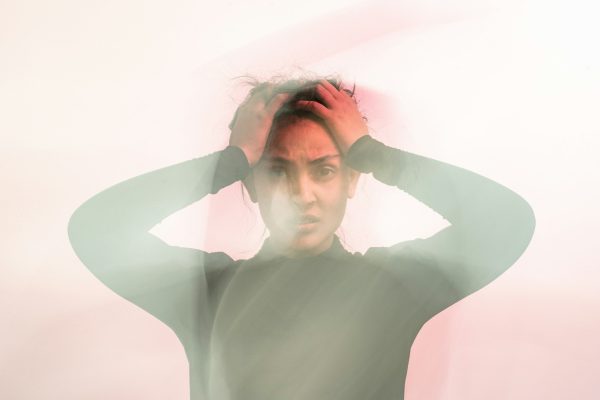
Have you ever considered that your anxiety might not be a disorder at all, but a messenger?
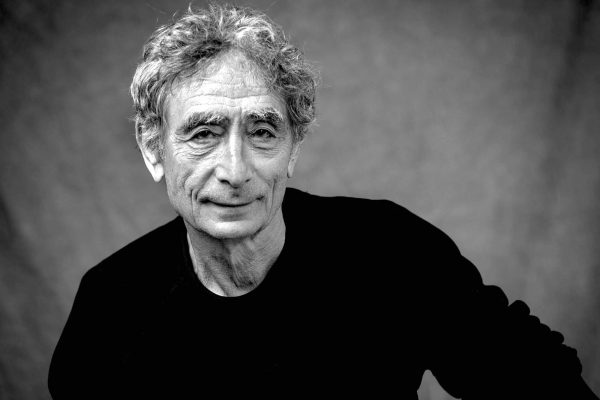
Dr. Gabor Maté argues that anxiety is not something to simply accept or adapt to — it is a signal from the body, pointing toward something unresolved. As a counsellor in Stroud and Brimscombe, and an online counsellor supporting clients across the UK, I see this every day: anxiety is not fixed. With the right conditions, it can soften, shift and become deeply understandable.
Recently I’ve been revisiting Maté’s work, and his perspective remains one of the most powerful ways to re-understand anxiety. As a physician and trauma expert, he emphasises that anxiety isn’t something “wrong” with us. It is a normal biological response to perceived threat, especially when those threats were present early in life.
If you’d like to learn more about anxiety and the nervous system, my next article will be released shortly.
Fear vs Anxiety: The Distinction That Changes Everything
One of Gabor Maté’s most useful distinctions is between fear and anxiety:
Fear is a response to an immediate, real danger.
Anxiety is the body staying on high alert long after the original threat has passed.
Put simply, your nervous system is behaving exactly as it was designed to — it’s just responding to cues from a past time and place, not the present moment.
The Role of Early Emotional Experience
According to Maté, many adults carry anxiety rooted in childhood experiences where emotional needs weren’t fully met. When children cannot express difficult feelings safely — or feel they must suppress themselves to maintain stability — the nervous system adapts by staying vigilant.
That familiar tightening or unease you feel today may be the echo of an earlier self whose fear was never named, understood, or comforted.
Maté’s Critique of Modern Medicine — And Why It Matters for Anxiety
As a medical doctor, Maté is respectful of his profession while also honest about its limitations. His critique is directed at the system, not individual clinicians.
A central issue, he argues, is the fragmentation of modern healthcare. Specialisation has advanced scientific understanding, but it has also divided mind from body, and the person from their story.
In When the Body Says No, he writes:
“The lay public, ahead of the professionals in many ways and less shackled to old orthodoxies, finds it less threatening to accept that we cannot be divided up so easily and that the whole wondrous human organism is more than simply the sum of its parts.”
(Maté, 2003, p.8)
And more explicitly:
“…there is no body that is not mind, no mind that is not body.”
(Maté, 2003, p.9)
This separation means stress, trauma, emotional suppression, family dynamics and relational wounds are often treated as unrelated to physical or psychological symptoms. Yet for Maté — and many of us working therapeutically — these elements are inseparable.
This is not a new insight. In one of Plato’s dialogues, Socrates quotes a Thracian doctor criticising Greek physicians for treating body and mind separately — suggesting that even thousands of years ago, we knew this fragmentation was harmful (Maté, 2003, p.9).
Historically, healing happened within relationship. The traditional healer or local doctor knew the families they treated. They understood context, generational patterns, and the emotional landscape — not just the diagnosis.
Much of that relational container has been lost today….and it matters.
In therapy, I see every hour how powerful it is when someone is finally met with presence — without judgement, without being rushed, without being reduced to symptoms. That human connection is often the point where anxiety begins to make sense.
What Healing Looks Like: Maté’s Pathways (and How I Work)
Maté’s pathways to healing align closely with my own therapeutic approach:
Compassionate self-inquiry into the roots of anxiety
Somatic awareness and regulation, including breath work and grounding
Healthy emotional expression; learning to communicate our needs
Authentic, safe relationships that help recalibrate the nervous system
Clear boundaries that reduce internal conflict and over-responsibility
The aim is not to “get rid” of anxiety, but to understand what it is trying to communicate.
The Core Message: Anxiety Is an Invitation
What resonates most in Maté’s work is the idea that anxiety is not a pathology — it is information. A signal.
A call to reconnect with the parts of ourselves that were once overwhelmed, unheard or unsupported.
When anxiety becomes understandable, it becomes workable.
If This Perspective Speaks to You
If this way of seeing anxiety resonates with you — or if you’d like to explore how therapy might help you make sense of your experience — you’re welcome to get in touch.
I work with clients face-to-face in Stroud and Brimscombe, and also as an online counsellor for clients across the UK & Internationally.
I work as a counsellor specialising in: anxiety & stress, neurodiversity and rebuilding the relationships with ourselves & others.
📧 luke@lbwcounselling.co.uk
🌐 www.lbwcounselling.co.uk
December 9, 2025